


Are teams re-entering the same information in multiple places?

Are updates getting lost between departments, systems, or vendors?

Is it harder than it should be to see job status, capacity, or bottlenecks?

Digital Transformation Should Feel Practical

Digital transformation in manufacturing should not mean replacing everything at once. It should mean helping your systems work better together, then improving from there.
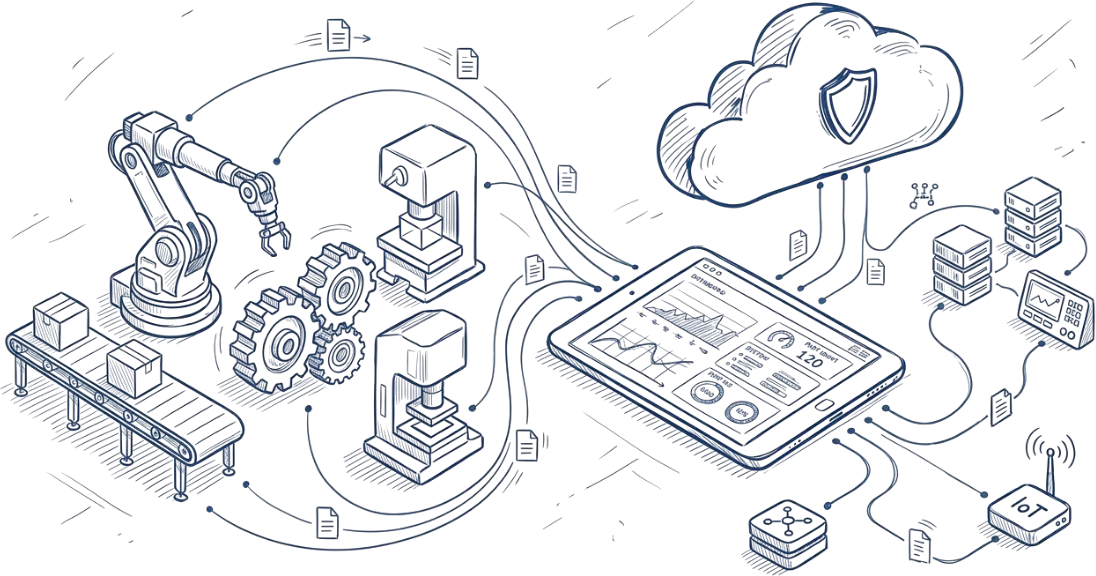
Your systems stop working in silos
Handshake inside a magnifying glass with the word GIASPACE, symbolizing partnership and collaboration.

Quality control automation

Production line optimization

Demand forecasting

Equipment monitoring & analytics

Modernize in Phases Without Interrupting Production

Manufacturers need a path forward that operations can actually support. That means clear priorities, realistic planning, and the right coordination across teams and vendors.

Assess Current Workflows

Start by identifying the systems, bottlenecks, and manual workarounds slowing production. This gives you a clearer view of where friction is happening today.
Close-up of a magnifying glass inspecting a miniature factory production line.

Build a Clear Roadmap

Create a practical plan based on your priorities, budget, and operations. Focus first on the improvements that reduce friction now and support future automation.

Gray S-shaped track with four blue 3D blocks labeled 1–4 placed along the path, representing steps in a process.

Execute in Manageable Phases

Roll out changes in steps that make sense for your plant. Keep production supported with stable systems, vendor coordination, and day-to-day IT support throughout the process.
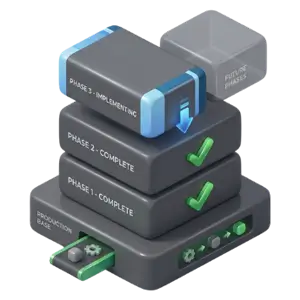

Three-tier gray progress module showing Phase 1 and Phase 2 complete (green checks) and Phase 3 - Implementation in progress at the top, a conceptual illustration of project milestones.

GiaSpace helps Cain Food Industries modernize infrastructure and maintain responsive IT support.

Take Back Your Time

Manufacturing businesses need more than reactive support. They need a partner that can help connect systems, simplify workflows, and support long-term modernization without creating more disruption.

Common Questions Manufacturers Ask

Get answers about workflow modernization, connected systems, and practical next steps.

By starting with how your workflows operate today, then building a phased roadmap around your priorities. The goal is to improve systems in a manageable order, not create unnecessary disruption.
Yes. Manufacturing workflows often depend on multiple systems working together. The goal is to reduce silos, improve visibility, and make those tools easier to use across your operation.
Modernization projects need more than technical support. They also need planning, budgeting, vendor coordination, and alignment across leadership and operations.
No. Managed IT and security are part of the foundation, but the bigger goal is helping your workflows become more connected, efficient, and scalable over time.
Yes. Internal IT teams often need added support for roadmap planning, vendor coordination, documentation, and larger modernization projects.
Get IT Help Now